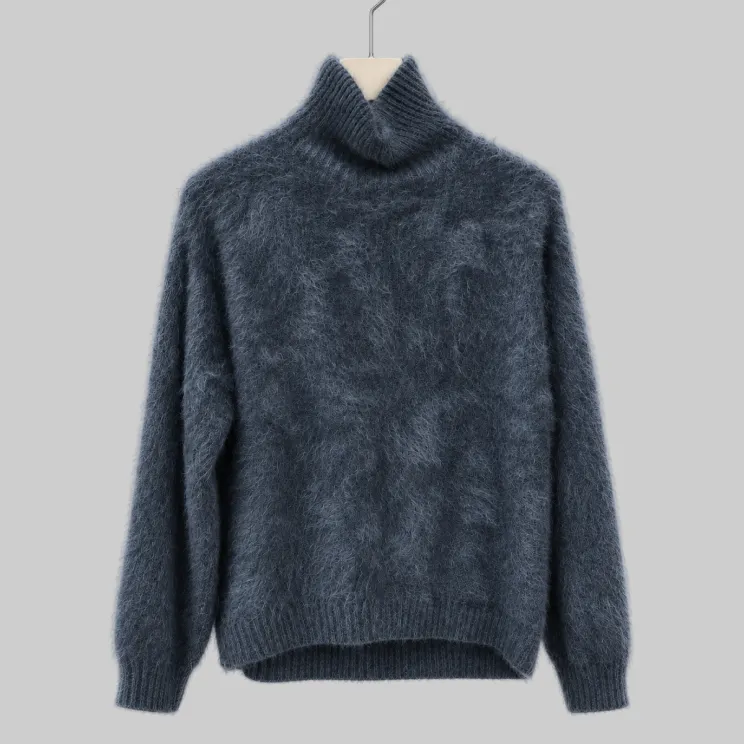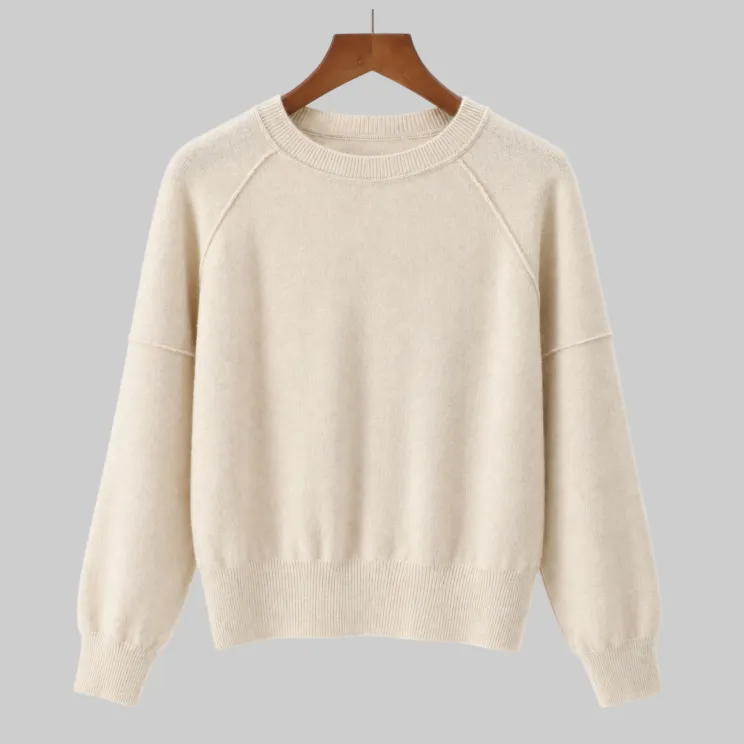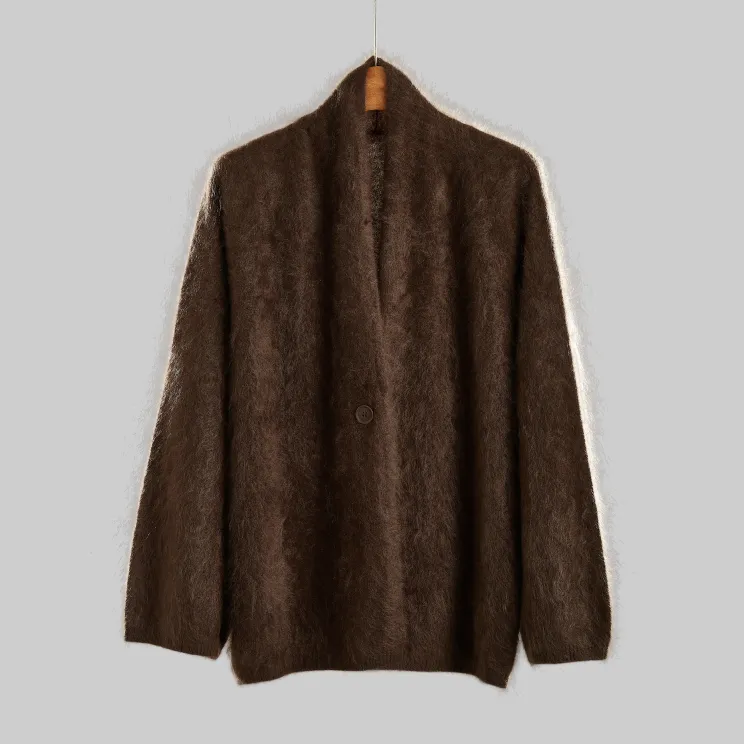


The global cashmere market is highly fragmented, saturated with varying fiber qualities, misleading labels, and synthetic adulterants. For procurement teams, independent designers, and wholesale buyers, sourcing genuine raw materials is a critical investment. Securing high-quality fiber directly influences the retail price point, garment longevity, and ultimately, brand reputation. The core differentiator between a luxury garment and a fast-fashion commodity lies in the raw fiber grading system. This guide defines what Grade A cashmere is, how it performs mechanically under stress, and how B2B buyers can scientifically authenticate their supply chains.
The Anatomy of Cashmere: Micron Count and Staple Length
Cashmere quality is not a subjective metric based entirely on touch. It is universally measured by two highly specific physical metrics: fiber diameter (measured in microns) and fiber length (measured in millimeters). Understanding these two dimensions is mandatory for accurate technical pack development and supplier negotiations.
Micron Count (Diameter): The Science of Softness
A micron is one-millionth of a meter. To provide context, an average human hair measures roughly 70 microns in diameter. Cashmere must legally fall below 19 microns to be classified as such in many international jurisdictions. The lower the micron count, the softer, lighter, and more flexible the fiber. A lower micron count means the fiber bends easily when it makes contact with human skin, completely eliminating the rigid "prickle factor" or itching associated with standard sheep's wool.
Staple Length: The Secret to Anti-Pilling and Durability
Staple length measures the longitudinal length of the individual down hairs combed from the goat. In textile engineering, longer fibers are drastically superior. When raw fiber is spun into yarn, longer fibers overlap more extensively along the axis. This extensive overlapping allows the spinning mill to apply a tighter, more cohesive twist to the yarn. This physical anchoring prevents individual hairs from escaping the yarn matrix. Therefore, a longer staple length effectively eliminates catastrophic pilling, shedding, and friction-induced wear.
The Harvesting Process: Combing vs. Shearing
The method used to collect the fiber significantly impacts its final staple length and purity. Cashmere is collected during the spring molting season. Premium Grade A fiber is exclusively collected by hand-combing the goat to carefully extract the loose undercoat without cutting the coarse outer guard hairs. Conversely, mass-market shearing cuts the fibers bluntly and mixes coarse guard hairs with the delicate down. This drastically reduces the overall staple length and increases the micron average. Processing sheared fiber requires intense mechanical dehairing, which further breaks and damages the delicate down, resulting in inferior yarn.
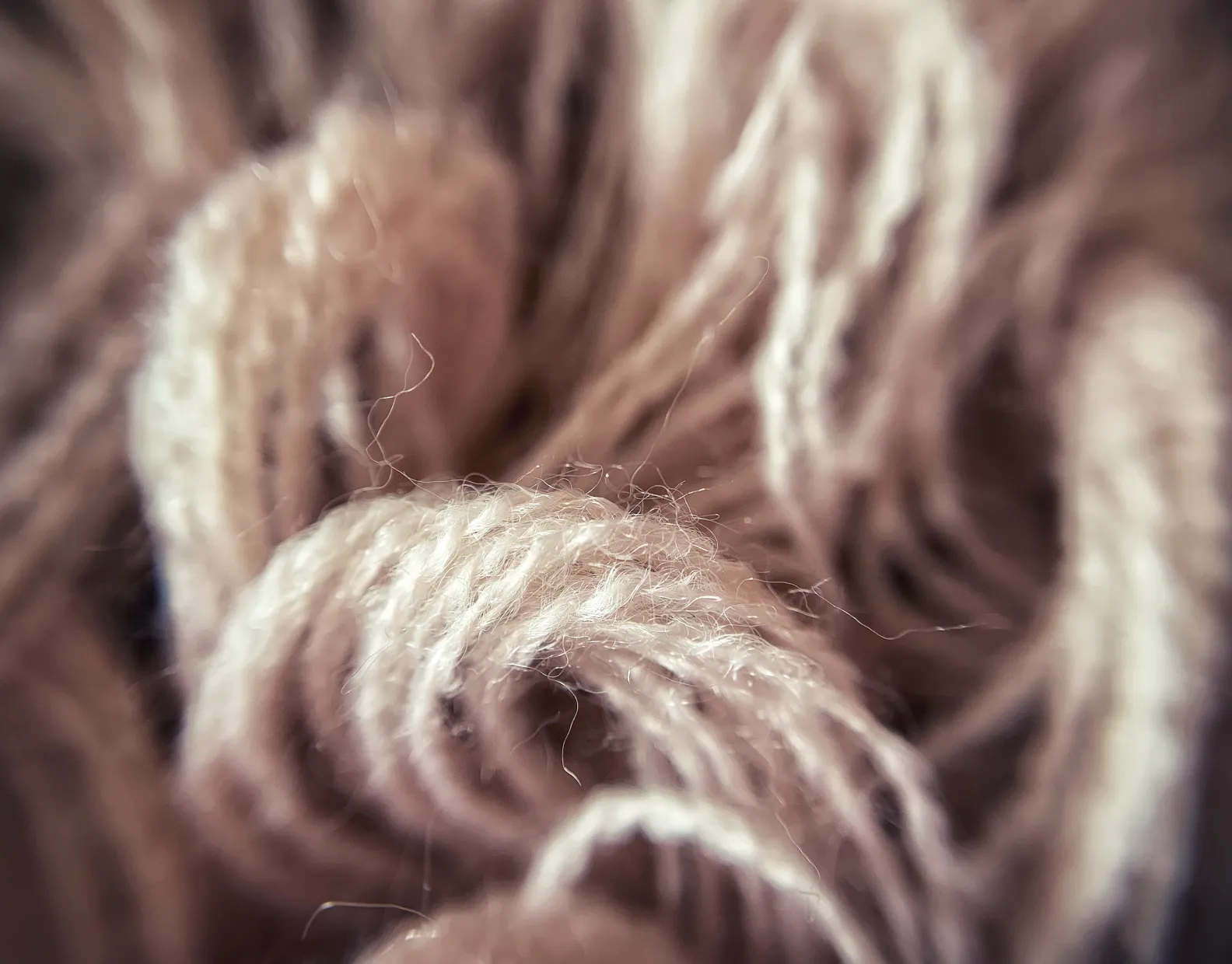
The Cashmere Grading System Explained
Manufacturers and raw material exchanges categorize cashmere into three primary tiers: Grade A, Grade B, and Grade C. These tiers dictate the mechanical behavior of the finished knitwear.
Grade A Cashmere: The Luxury Standard
Grade A cashmere represents the finest, longest, and purest undercoat fibers combed from the Capra Hircus goat. This is the absolute gold standard for luxury manufacturing.
- Technical Specifications: Fiber diameter strictly falls between 14.0 and 15.5 microns. The staple length ranges from 34mm to 38mm.
- Mechanical Performance: Because the fibers are exceptionally long, the resulting yarn is highly durable and structurally stable. Garments knitted from Grade A yarn retain their dimensional memory and resist stretching at high-tension areas like elbows and hems. The ultra-low micron count ensures absolute softness. This tier commands the highest market price and is mandatory for high-end OEM/ODM production.
Grade B Cashmere: The Mid-Tier Compromise
Grade B is frequently utilized by mid-market retail brands aiming to balance cost with consumer recognition of the cashmere label.
- Technical Specifications: Fiber diameter ranges from 16 to 19 microns. Staple lengths are generally shorter, averaging between 28mm and 33mm.
- Mechanical Performance: Grade B remains relatively soft but feels noticeably heavier and denser than Grade A. It lacks the featherlight, cloud-like loft of premium fibers. Because the fibers are shorter and thicker, Grade B yarn cannot be spun as tightly without breaking. This results in a fabric that is structurally weaker and significantly more prone to friction-induced pilling over a single winter season.
Grade C Cashmere: The Budget Market
Grade C caters to fast-fashion brands and extreme budget accessories. It is often blended heavily with synthetic fibers to mask its poor structural integrity.
- Technical Specifications: Fiber diameter typically sits exactly at the legal limit of 19 microns, frequently exceeding it and reaching up to 30 microns due to poor sorting. Fibers are extremely short, often measuring below 28mm.
- Mechanical Performance: Grade C is the lowest quality cashmere available. It feels scratchy, closely resembling standard sheep's wool. The extremely short staple length guarantees rapid pilling, aggressive shedding, and severe dimensional distortion after a single wash cycle. Brands utilizing Grade C fibers often treat the garments with heavy chemical softeners to mimic the initial touch of higher grades. This artificial coating washes out immediately upon dry cleaning, revealing a coarse, degraded fabric.
How to Authenticate Grade A Cashmere in Bulk Orders
Brands purchasing wholesale cashmere knitwear must implement strict quality control protocols to verify their raw material. Relying solely on supplier claims introduces immense supply chain risk.
Laboratory Microscopic Analysis
The only legally binding method to authenticate cashmere grading is independent laboratory testing. Independent testing bodies, such as SGS or Intertek, conduct longitudinal microscopic analysis. Technicians view the fiber cross-sections under high magnification to measure the exact micron counts and verify the staple length distribution. This analysis also identifies the presence of synthetic adulterants (like viscose, nylon, or acrylic) or coarse guard hairs that lower-tier factories use as cheap filler material.
The Tensile Recovery Test
Grade A cashmere fibers possess immense resilience due to their length and tight spinning architecture. When executing quality control on physical samples, gently stretch a knitted panel horizontally. The fabric should instantly snap back to its original dimensions. Lower-grade cashmere, lacking staple length and structural integrity, will remain permanently distorted and loose after manual stretching.
Tactile and Friction Inspections
Authentic Grade A cashmere provides intense thermal insulation without heavy bulk. It should feel lightweight and entirely frictionless. Run a hand aggressively across the surface of a new garment. Top-tier cashmere will not yield immediate shedding or loose fiber balls. If rubbing the fabric generates immediate pilling, the garment was manufactured using short-staple Grade B or Grade C down.
Ply, Gauge, and Twist: Translating Raw Fiber into Finished Knitwear
Procuring Grade A fiber is only the first step. The raw material must be engineered into yarn and knitted using precise mathematical metrics. B2B tech packs must specify ply, gauge, and twist metrics.
Yarn Ply Architecture
Ply refers to the number of individual cashmere threads twisted together to form the main knitting yarn. 2-ply is the industry standard for durability and warmth, providing structural balance. 4-ply or 6-ply architectures are utilized for heavy winter outerwear and chunky blankets. Grade A fibers produce the strongest multi-ply yarns because the long staples interlock deeply during the twisting phase. It is important to note that a high ply count does not equal high quality; a 4-ply sweater can easily be manufactured from cheap, short-staple Grade C cashmere.
The Physics of Yarn Twist (TPI)
Twists Per Inch (TPI) dictates the balance between softness and durability in the yarn. A low TPI creates a softer, fluffier yarn but increases the risk of pilling. A high TPI creates a durable, crisp yarn but can feel less luxurious. Grade A fiber allows manufacturers to achieve the perfect optimal TPI. The fibers are long enough to be securely anchored without requiring extreme, tight twisting that ruins the thermal loft.
Machine Gauge (GG)
Gauge (GG) refers to the needle density on the computerized flat knitting machine. It dictates the tightness and weight of the finished fabric. A 14GG machine requires fine worsted yarn (typically 2/48Nm to 2/60Nm) to create a tight, dense, lightweight fabric ideal for trans-seasonal wear. A 7GG machine utilizes thicker woolen yarn (typically 2/26Nm) for chunkier, loftier winter sweaters with pronounced stitch definition. Grade A fiber is particularly vital for fine-gauge knitting where yarn tensile strength is pushed to its absolute limit on the machine.
Wet Finishing and The Cashmere Bloom
The post-knitting wet finishing stage (milling) develops the cashmere's signature softness. Milling involves washing the knitted panels in temperature-controlled baths to relax the fibers and allow the cashmere to "bloom."
The quality of the raw fiber becomes blatantly obvious during this stage. If Grade C cashmere is milled, the short fibers completely detach under the mechanical agitation and clog the washing machines, leaving a thin, weak fabric. Grade A cashmere blooms beautifully, pushing a fine halo of soft fibers to the surface while the long roots remain securely locked in the knitted matrix, ensuring long-term durability.
The Chemistry of Dyeing and Its Impact on Grades
The interaction between dye chemicals and protein fibers exposes the true quality of the raw material. Grade A cashmere absorbs dye differently than lower grades.
Because Grade A fibers are incredibly fine and pure, they require lower temperature acid dye baths and shorter processing times. This preserves the natural structural integrity and lipid content of the protein fiber. Conversely, Grade C cashmere is often contaminated with coarse guard hairs and severe color irregularities. To achieve a uniform, solid color on Grade C batches, factories must execute aggressive chemical bleaching followed by high-temperature dyeing. This heavy chemical processing strips the fiber of its natural moisture, further weakening the already short fibers and resulting in a brittle, harsh finished garment.
Avoiding the "Cashmere Feel" Trap in B2B Sourcing
Many wholesale suppliers market products under misleading nomenclature such as "cashmere feel," "cashmere touch," or "pashmina blend." These are entirely synthetic fabrics, usually heavily brushed acrylic or chemically softened viscose designed to deceive touch-tests.
Procurement teams must demand precise fiber content documentation. Even within garments legally labeled as "100% Cashmere," unethical factories frequently blend 10% Grade A fiber with 90% Grade C fiber. This lowers production costs drastically while passing rudimentary touch tests on the showroom floor. This deceptive blending is exactly why specific micron and staple length requirements must be explicitly outlined in B2B manufacturing contracts and verified through third-party audits.
Why Source Directly from Inner Mongolia?
Geographical origin directly impacts fiber quality. The extreme temperature fluctuations in the Inner Mongolian plateau—often dropping below -30 degrees Celsius during the deep winter—force the Capra Hircus goats to grow the finest, most densely insulating undercoats in the world. Fibers sourced from other regions typically exhibit higher micron counts and shorter lengths.
Sourcing directly from manufacturers based in or sourcing directly from this region eliminates intermediary supply chain markups. It guarantees access to authentic Grade A raw materials before they are blended, exported, or chemically degraded in secondary global supply chains.
Partner with Zhejiang Dingchuang Cashmere
Founded in 2013, Zhejiang Dingchuang Cashmere operates an integrated manufacturing supply chain focused exclusively on premium quality. We handle raw fiber collection and dehairing in-house, securing premium 36-38mm Inner Mongolian cashmere. Partnering with specialized, highly vetted facilities for spinning, dyeing, and knitting under our strict quality control, we deliver uncompromised OEM/ODM knitwear to global brands.
By controlling the material input at the source, we ensure every garment we produce utilizes authentic, long-staple cashmere that resists pilling, maintains its structural memory, and provides the true luxury hand-feel your customers demand. From precision 3D WholeGarment knitting to signature brushed finishes, we turn technical specifications into verifiable, retail-ready products.
-

Dingchuang Textile Technical Team
Cashmere Sourcing & Knitwear Specialists, Dingchuang Cashmere
Authored by the technical specialists at Zhejiang Dingchuang Cashmere Co., Ltd. Founded in 2013 in Tongxiang, our team oversees integrated supply chain operations from raw goat cashmere collection and in-house mechanical dehairing to precision computerized knitting and specialty wet finishing, providing actionable manufacturing guidance for global apparel brands and designers.