
Search
Enter keywords to search for products, blog posts, and more.
Enter keywords to search for products, blog posts, and more.


Cropped Cashmere Crew Neck Sweaters

Relaxed Cashmere Crew Neck Sweaters

Oversized Cashmere Crew Neck Sweaters

Classic Cashmere Crew Neck Sweaters

Intarsia Cashmere Crew Neck Sweaters

Chunky Knit Cashmere Crew Neck Sweaters

Fine-Gauge Cashmere Crew Neck Pullovers

Slouchy Cashmere Crew Neck Sweaters
Crew neck construction concentrates stress at the collar and shoulder joins. We use single-stitch linking at these points and build washing shrinkage into the knitting program so finished measurements match the grading rules. Fiber preparation is managed at our own facility, with partner mills handling knitting and finishing under our quality protocol.
We preserve the collar's shape by utilizing specialized knitting programs that adjust the tension specifically for the ribbed neckline matrix. By employing tubular knits and precise single-stitch linking techniques, the collar maintains the structural memory required to snap back into a perfect circle after being pulled over the wearer's head.
Yes, our technical development team translates designs into customized knitting programs for any neckline variation. We manufacture classic crew necks, wider scoop necks, high-cut round necks, and thickened tubular collars across various gauges ranging from 3gg to 18gg.
Prototype sampling usually takes 7 to 14 days when utilizing our extensive inventory of stock yarn colors. Following sample approval, bulk production typically requires 30 to 45 days, depending on the complexity of the design, gauge requirements, and overall order volume.
Shrinkage behaves differently across fine 16gg fabrics compared to chunky 5gg fabrics. We calculate gauge-specific shrinkage rates during the prototype phase and incorporate them into our computerized flat knitting algorithms. Every batch undergoes strict post-milling dimensional audits to ensure conformity to your grading rules.
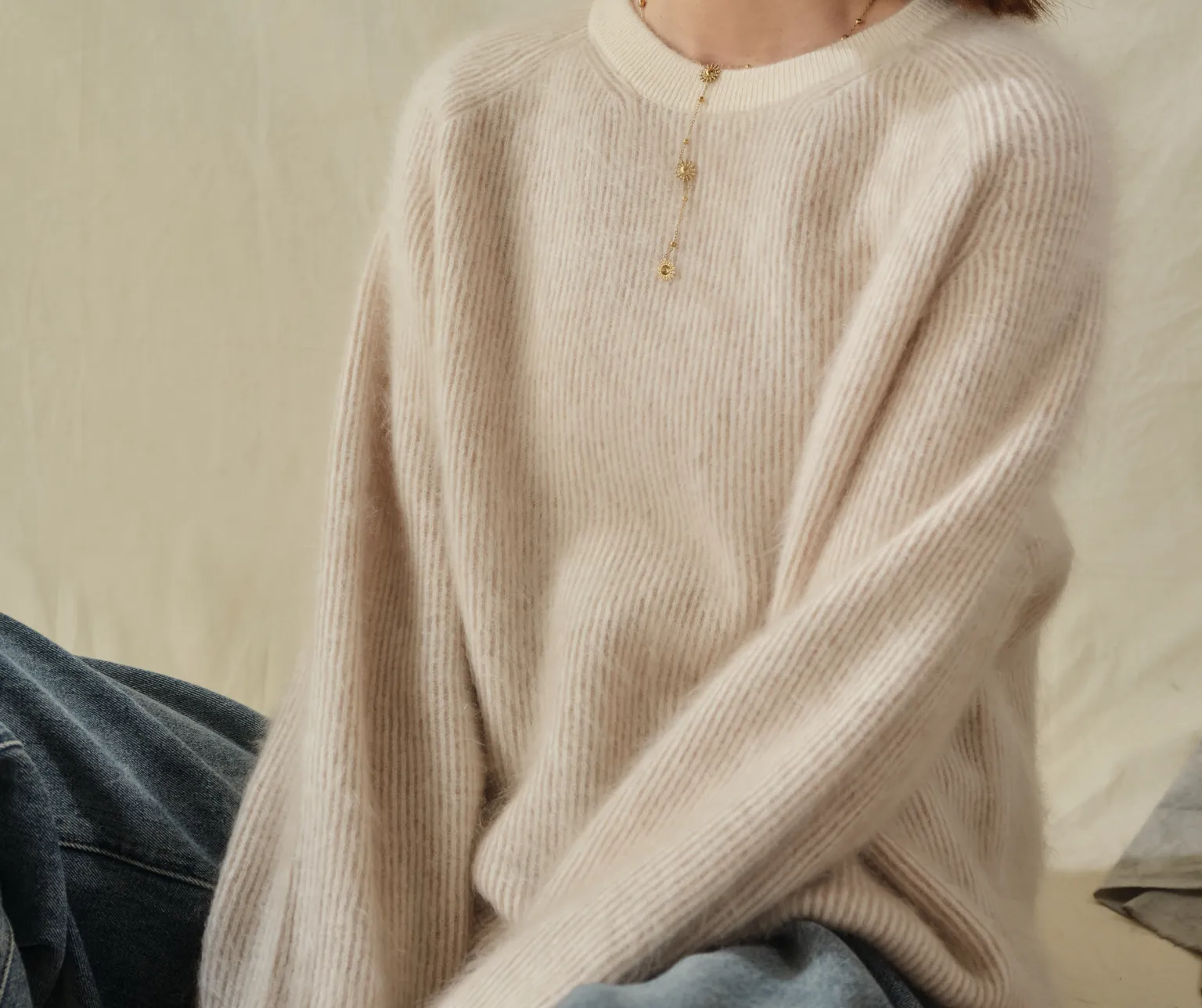
The crew neck is the highest-volume silhouette in cashmere knitwear, and its simplicity is exactly what makes it demanding. With no collar, placket, or pattern to draw the eye, every construction detail is visible: the collar rib, the shoulder seams, the evenness of the fabric surface. Quality in a crew neck is the absence of visible problems.
Collar rib and linking. The crew collar is a short ribbed band under constant stretch. Industry practice is a 1x1 rib knitted at higher tension than the body, attached with single-stitch linking so the seam disappears into the fabric. Overlocked collar seams are faster and cheaper, but they create a ridge that is visible, uncomfortable, and unacceptable at premium retail.
Shoulder construction. Set-in shoulders produce the tailored silhouette of classic menswear; raglan shoulders give a more casual line and are common in women's relaxed fits. The choice changes the knitting program, the linking sequence, and the fit behavior, so it should be decided at the pattern stage rather than at sampling. Buyers comparing silhouettes can reference our V-neck range, which shares body blocks with crew neck programs and allows the two styles to be developed together efficiently.
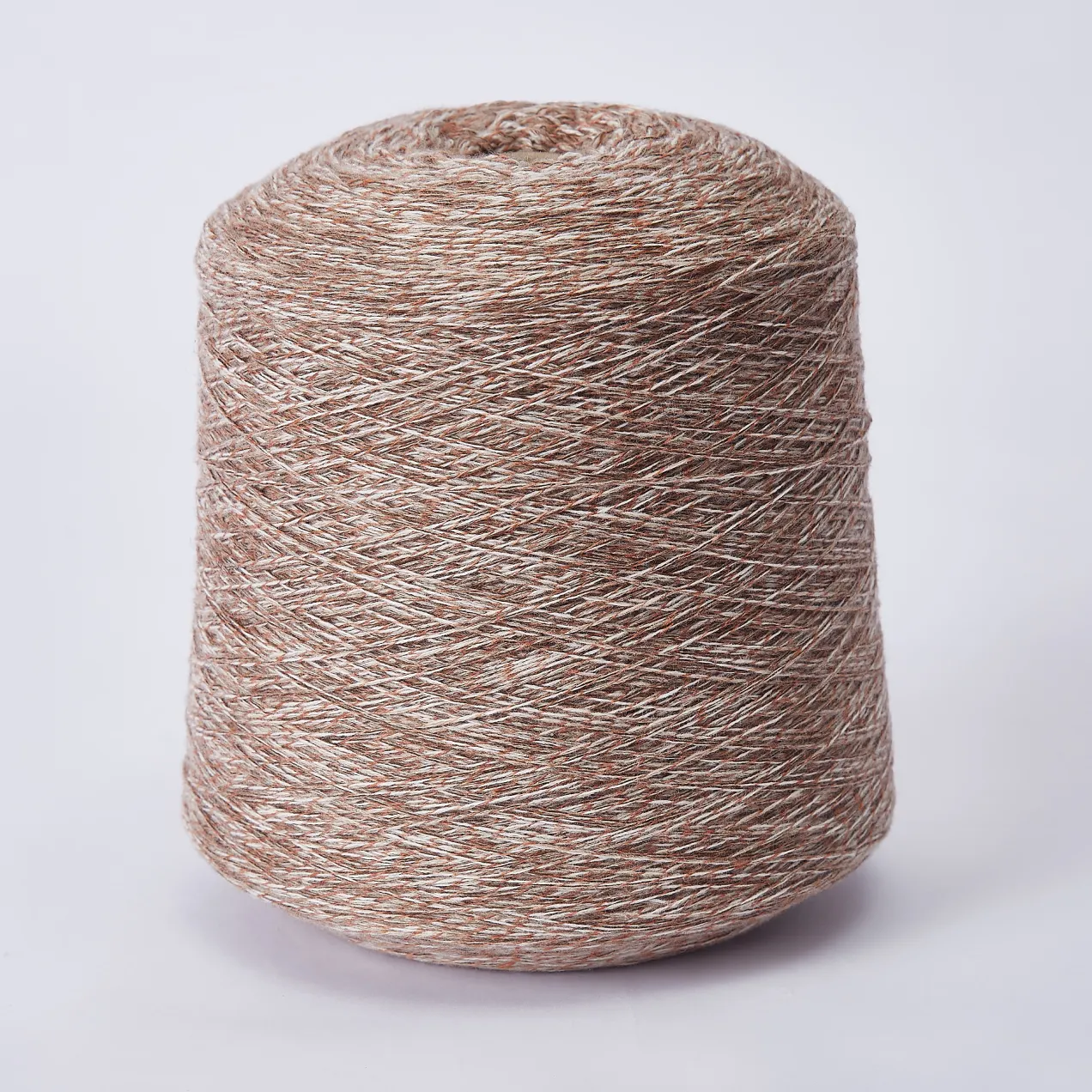
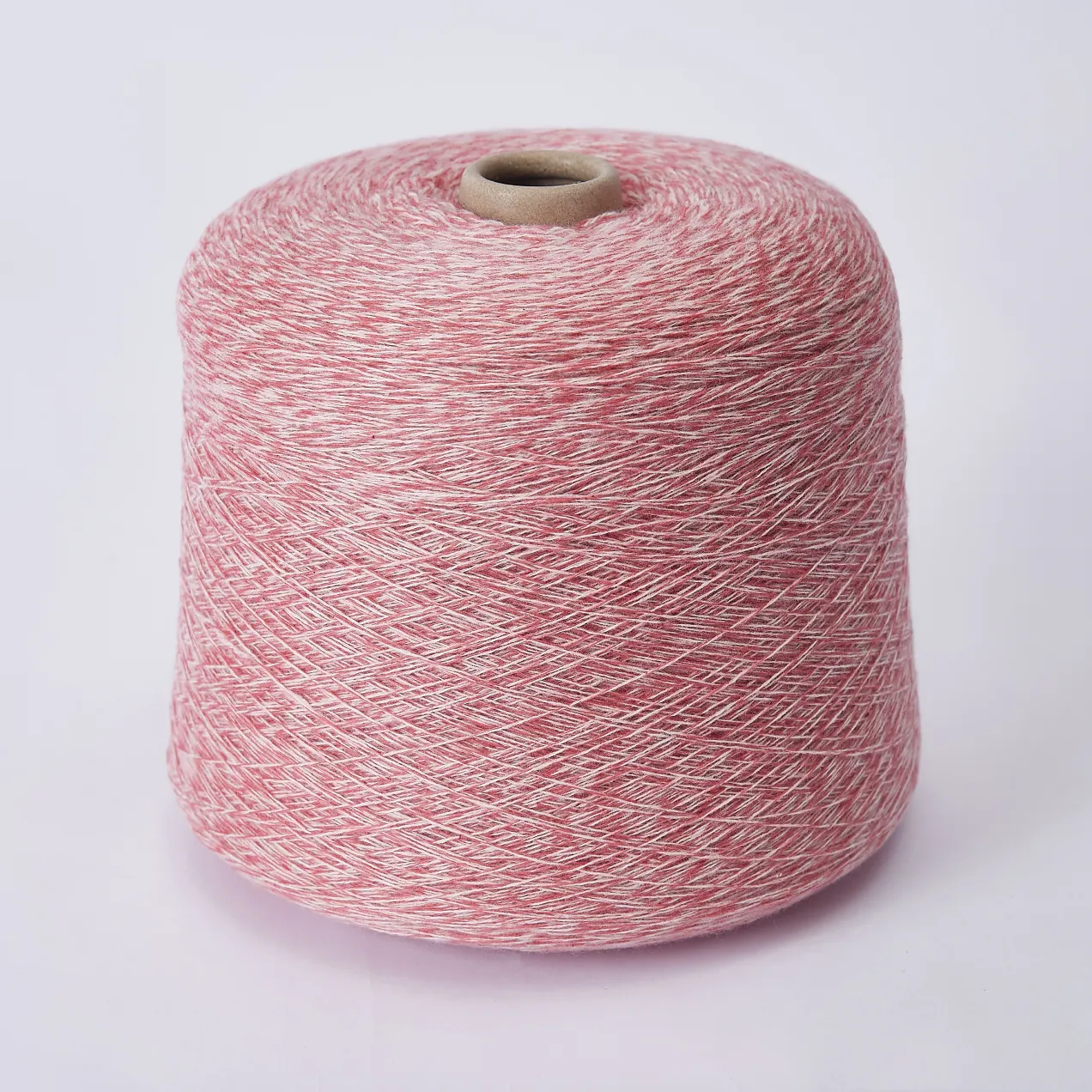
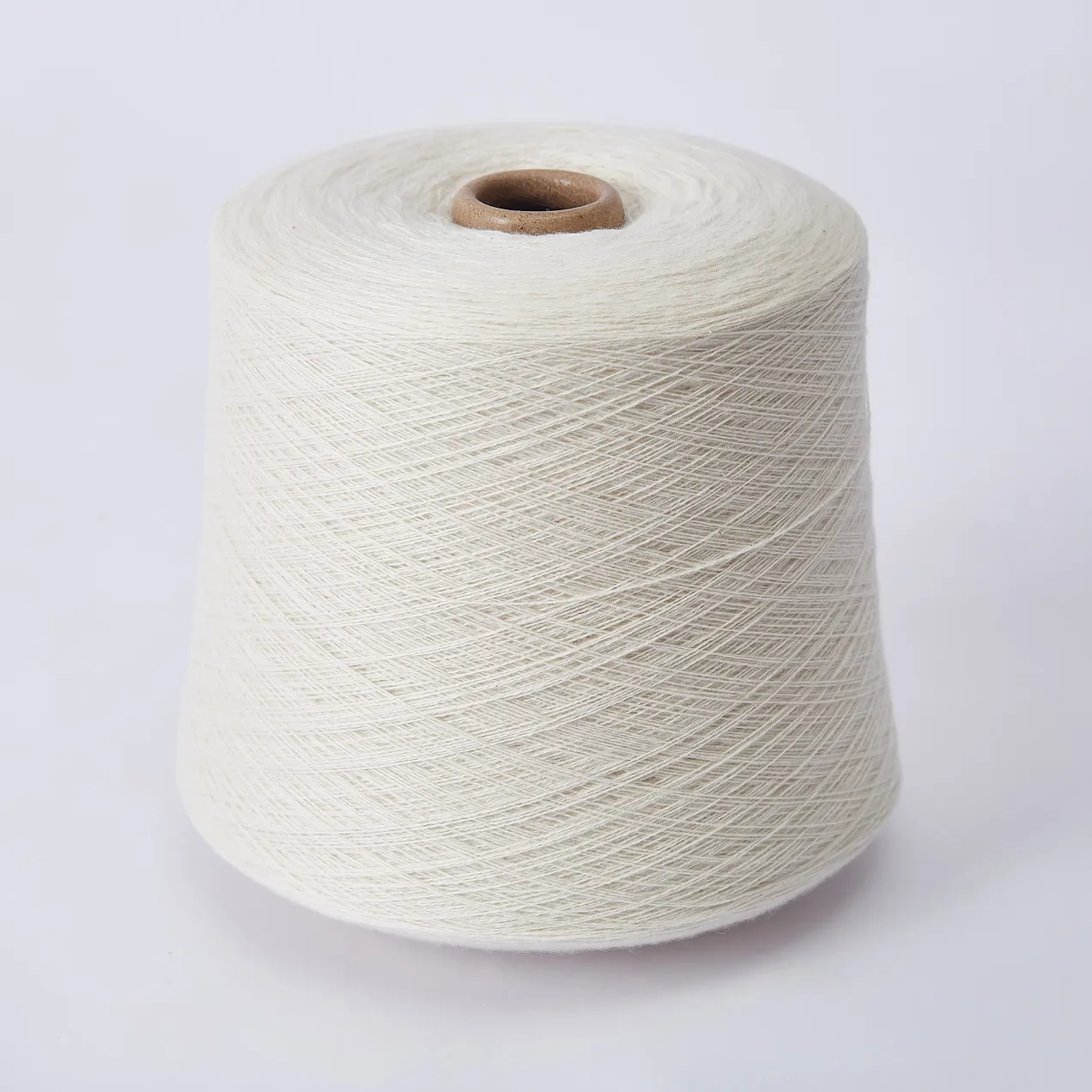
Surface evenness. On a plain jersey body, yarn quality is fully exposed. Even twist and consistent dye uptake are what separate a clean surface from a streaky one, which is why core crew neck programs are built on 100% cashmere yarns with documented micron and staple specifications.
Dimensional stability. Crew necks are washed more often than most knitwear because they sit at the center of the wardrobe. Shrinkage rates are measured at sampling, built into the knitting program, and re-verified on bulk, so the medium a customer buys in year three matches the medium from year one.
Repeat programs. The crew neck's commercial logic is repetition: core colors, stable sizing, seasonal re-orders. Our wholesale program is structured around exactly this cycle, with locked specifications held across production runs.
Gauge selection by market. Twelve-gauge remains the global standard for the category, but regional preferences differ: Japanese retail favors finer 14gg knits with a drier hand, while Scandinavian contemporary brands increasingly specify heavier 7gg bodies. Gauge choice should therefore reflect the destination market's retail norm as much as the design intent.
What to specify. A production-ready crew neck spec states yarn count and micron range, gauge, target weight per size, collar rib depth, seam construction, washing parameters, and tolerance tables. With those values locked, the silhouette's simplicity becomes an advantage: fewer variables mean faster sampling and more predictable bulk.