
Cashmere Knitwear Construction Methods: Fully-Fashioned Linking, WholeGarment, and Cut-and-Sew Compared for B2B Buyers
Yarn selection and machine gauge define the fabric of a sweater, while garment construction determines its fit, seam bulk, yarn consumption, and unit cost. When sourcing cashmere knitwear at commercial scale, B2B procurement teams choose among three distinct construction methods: fully-fashioned knitting with loop-to-loop linking, WholeGarment (3D seamless) knitting, and cut-and-sew assembly. Each method carries specific engineering trade-offs in material waste, labor intensity, machine availability, and silhouette flexibility. Selecting the wrong construction method for a target price tier or design silhouette leads to avoidable FOB cost inflation, seam distortion after washing, or excessive fabric waste. This technical guide compares all three methods and outlines the exact construction specifications required in B2B tech packs.
1. Fully-Fashioned Knitting and Loop-to-Loop Linking
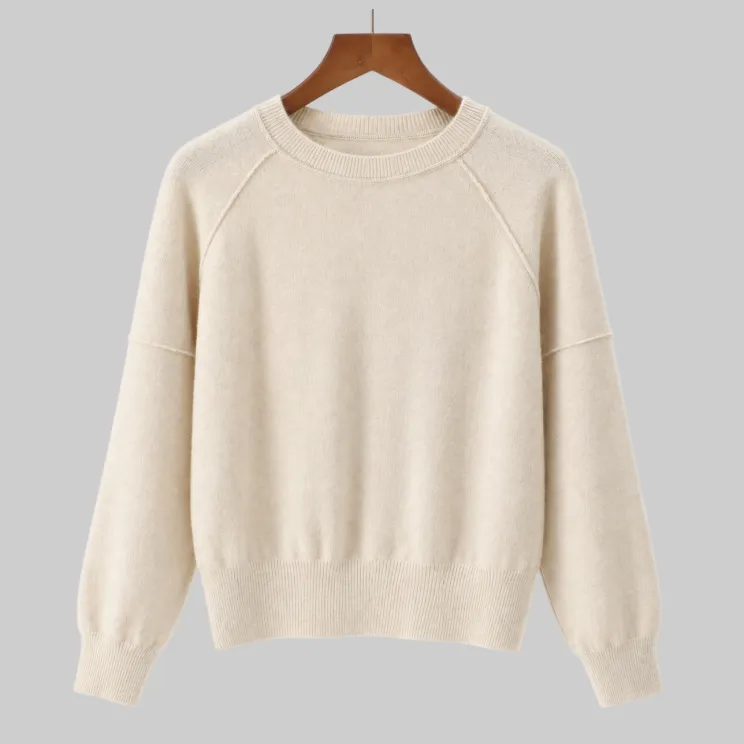
Fully-fashioned (FF) knitting is the commercial standard for luxury and mid-to-high-end 100 percent cashmere apparel. In this process, individual garment panels—front, back, sleeves, and trim—are knitted directly to their final shaped contours on computerized flat-bed machines (such as Shima Seiki or Stoll). Shaping is achieved by mechanically transferring stitches inward or outward during knitting, creating visible fashioning marks along the armholes, raglan lines, and necklines.
How Loop-to-Loop Linking Works
Once knitted, the shaped panels are joined on a dial linking machine. A skilled operator places each individual open loop from two adjacent panels onto corresponding steel points around a rotating dial. A chain-stitch needle then sews through the aligned loops using the exact same yarn as the garment body. This process produces a flat, elastic, and virtually invisible seam that stretches at the same rate as the surrounding knitted fabric.
Engineering and Commercial Characteristics
- Low Material Waste: Because panels are knitted to exact dimensions, yarn waste is typically limited to 3% to 5% (primarily from waste yarn courses and linking allowances). Given the high per-kilogram cost of cashmere yarn, this efficiency directly protects unit margins.
- High Design Flexibility: Fully-fashioned production supports complex stitch architectures—including heavy cables, intarsia, jacquard, and structured pockets—across all standard gauges from 3GG to 16GG.
- Labor Dependency: Loop-to-loop linking is a manual, high-skill operation. Linking capacity often acts as the primary bottleneck during peak autumn manufacturing schedules, especially for fine-gauge 14GG and 16GG garments where individual loops are microscopic.
2. WholeGarment (3D Seamless) Knitting
WholeGarment knitting eliminates the panel-linking stage entirely by producing a complete, three-dimensional sweater in a single uninterrupted machine cycle. This method requires specialized four-needle-bed computerized flat-bed machines (such as the Shima Seiki MACH2XS series) equipped with slide needles capable of knitting tubular structures for the torso and sleeves simultaneously, then merging them seamlessly at the shoulders and neckline.
Engineering and Commercial Characteristics
- Zero Seam Bulk: Without linked seams at the shoulders, underarms, or sides, the garment offers unrestricted drape and maximum comfort against the skin. This makes WholeGarment particularly effective for lightweight base layers and fine-gauge cashmere sweaters.
- Minimal Yarn Waste: Material loss drops to under 1%, as no linking allowances or waste courses are required.
- Reduced Labor Exposure: Eliminating manual linking removes a major labor variable and improves consistency across large production runs.
- Machine and Design Constraints: WholeGarment machines require significantly higher capital investment and operate at slower knitting speeds than standard two-bed machines. Complex silhouettes—such as tailored cashmere cardigans with set-in pockets, heavy plackets, or intricate multi-color intarsia—remain difficult or commercially unviable on seamless beds.
3. Cut-and-Sew Knitwear Construction
Cut-and-sew construction treats knitted fabric like woven yardage. Large rectangular panels or tubular rolls of knitted fabric are produced on flat-bed or circular machines, steamed, laid out on cutting tables, and cut to pattern shapes using electric knives. The cut edges are then joined using industrial overlock (serging) machines.
Why Cut-and-Sew Is Rarely Used for Pure Cashmere
- Severe Material Waste: Cutting curved armholes and necklines from rectangular fabric generates 15% to 25% offcut waste. At current raw cashmere prices, discarding one-fifth of the yarn makes cut-and-sew economically irrational for 100% cashmere programs.
- Bulky, Rigid Seams: Overlock seams add noticeable thickness along the interior of the garment and restrict natural knit elasticity. Under repeated wear, cut edges can unravel if the overlock tension is improperly calibrated.
- Limited Viable Applications: Cut-and-sew is generally restricted to low-cost blended basics, heavily felted boiled-wool outerwear where cut edges do not fray, or specialized structured silhouettes requiring woven-style tailoring.
4. Side-by-Side Comparison for B2B Procurement
Procurement directors should evaluate construction methods against four operational metrics: yarn efficiency, seam performance, lead time, and total landed cost.
| Metric | Fully-Fashioned (Linked) | WholeGarment (3D Seamless) | Cut-and-Sew (Overlocked) |
|---|---|---|---|
| Yarn Waste Rate | 3% – 5% | < 1% | 15% – 25% |
| Seam Profile | Flat, elastic, low bulk | Zero seams | Bulky, lower elasticity |
| Silhouette & Stitch Range | Broadest (cables, intarsia, structured trim) | Moderate (best for clean pullovers) | High pattern freedom, limited luxury appeal |
| Knitting Speed | Fast (standard 2-bed machines) | Slower (specialized 4-bed machines) | Very fast (yardage production) |
| Post-Knitting Labor | High (manual dial linking) | Minimal (trimming & washing only) | Moderate (cutting & overlocking) |
| Target Market Tier | Luxury, premium, and mid-market | Luxury, performance, fine-gauge basics | Entry-level blends, boiled-wool outerwear |
5. Specifying Construction and Linking in the Tech Pack
Writing "fully-fashioned" on a purchase order is insufficient to control factory execution. A complete construction specification in a B2B tech pack should define four technical parameters:
- Linking Gauge Match: Specify that the dial linking machine gauge must match or slightly exceed the knitting machine gauge. For example, a 12GG sweater should be linked on a 12GG or 14GG linker. Using a coarser linker (such as 9GG on a 12GG panel) forces the operator to skip loops, creating puckering and weak spots. Refer to our yarn count and gauge guide for matching fabric density with equipment tiers.
- Shoulder Reinforcement: Heavy-gauge cashmere garments (3GG to 7GG) stretch under their own weight on hangers. Specify clear Mobilon tape or matching-yarn chain-stitch reinforcement inside the shoulder seams to maintain dimensional stability.
- Neckline and Placket Attachment: Define whether the collar rib is double-linked (sandwich linking) for a clean interior finish or single-linked for minimal bulk on fine-gauge silhouettes.
- Fashioning Mark Placement: State the exact number of needles from the seam edge where fashioning marks should sit (typically 4 to 6 needles inward) to ensure symmetrical visual detailing across all sizes.
6. Quality Control Checkpoints for Seams and Linking
During pre-shipment inspection (AQL 2.5), quality assurance teams should audit three specific construction failure points:
- Dropped Loops (Run-Downs): If a linking operator misses a single loop on the dial, that unsecured stitch will unravel into a vertical hole after the first wash. Inspectors should stretch every linked seam gently under bright lighting to expose skipped stitches before wet finishing.
- Seam Elasticity and Cracking: Pull the neckline and armhole seams laterally to 130% of their relaxed width. The linking yarn should stretch smoothly without snapping. Cracking indicates excessive chain-stitch tension on the linking machine.
- Post-Wash Seam Puckering: Linking yarn tension must match the relaxation shrinkage rate of the main knitted panel. Mismatched tension causes wavy, puckered seams after laundering. Cross-referencing construction tolerances with our dimensional stability guide prevents post-wash distortion.
7. Matching Construction to Your Collection with Dingchuang
Selecting the right construction method aligns raw material economics with brand positioning. Zhejiang Dingchuang Cashmere operates computerized flat-bed knitting lines alongside dedicated dial-linking workshops at our Tongxiang facility, supporting 3GG through 16GG fully-fashioned production as well as specialized seamless programs. Whether you are scaling a wholesale cashmere assortment or engineering private-label silhouettes through our custom development service, our technical team reviews your tech packs to recommend the most cost-effective and structurally sound construction method. Contact us to evaluate your upcoming collection specifications.
-

Dingchuang Textile Technical Team
Cashmere Sourcing & Knitwear Specialists, Dingchuang Cashmere
Authored by the technical specialists at Zhejiang Dingchuang Cashmere Co., Ltd. Founded in 2013 in Tongxiang, our team oversees integrated supply chain operations from raw goat cashmere collection and in-house mechanical dehairing to precision computerized knitting and specialty wet finishing, providing actionable manufacturing guidance for global apparel brands and designers.